




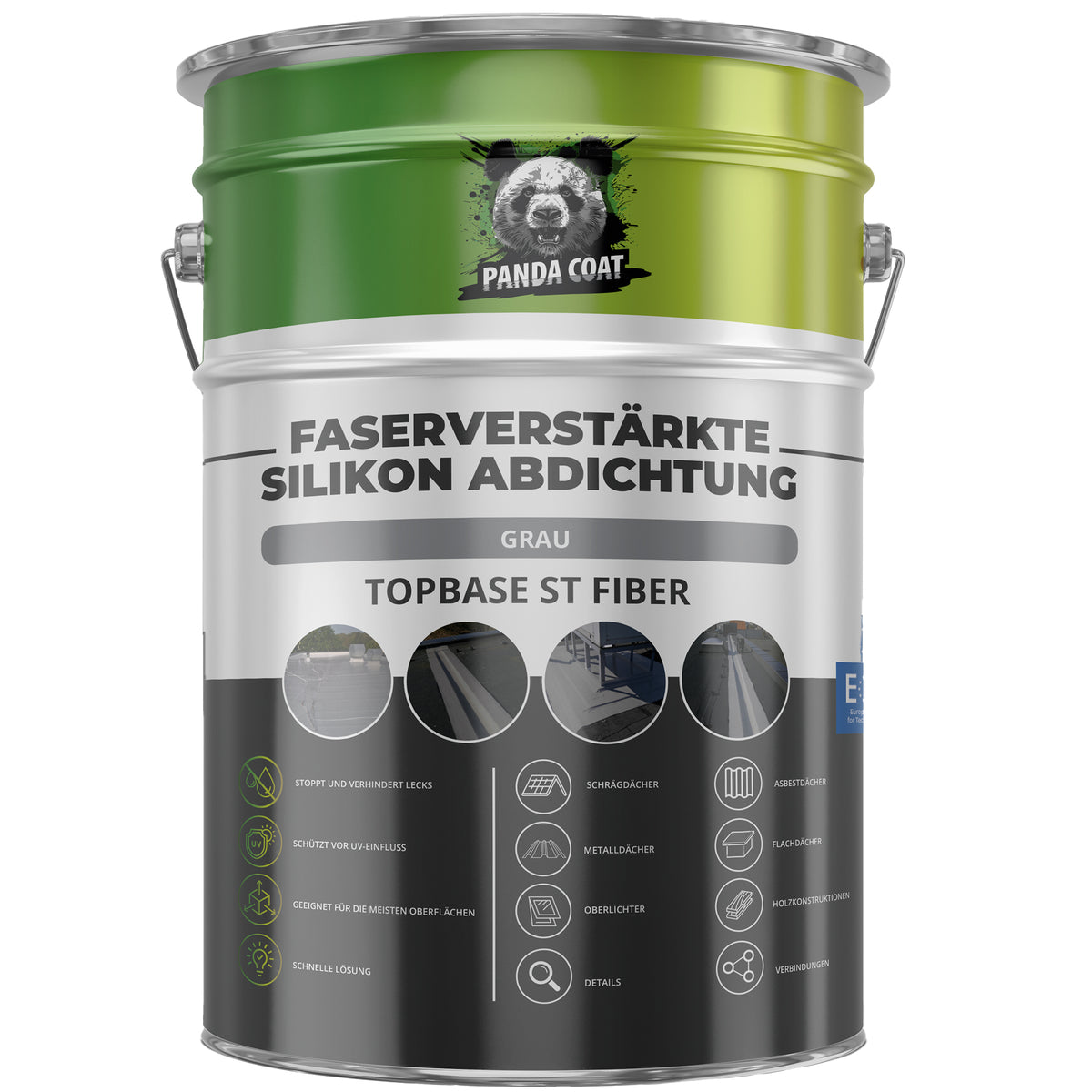
TopBase
ST
Fiber
–
Silicone
Waterproofing
Coating
with
Glass
Fibre,
Grey/White,
1-4.7
kg
TopBase
ST
Fiber
–
Silicone
Waterproofing
Coating
with
Glass
Fibre,
Grey/White,
1-4.7
kg
Chimney, joint or detail leaking again, where a thinner coating would just run off?
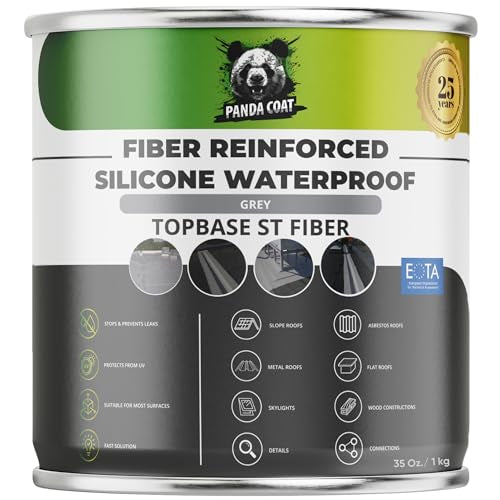
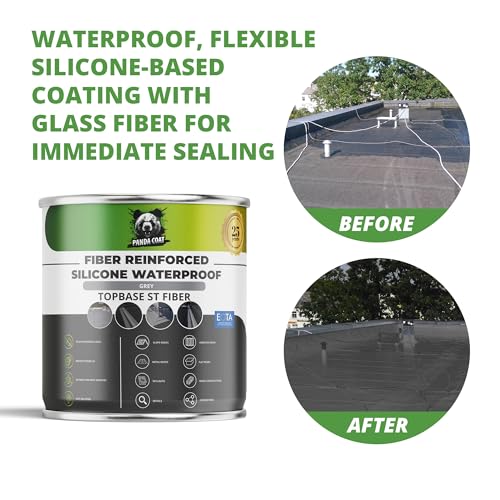
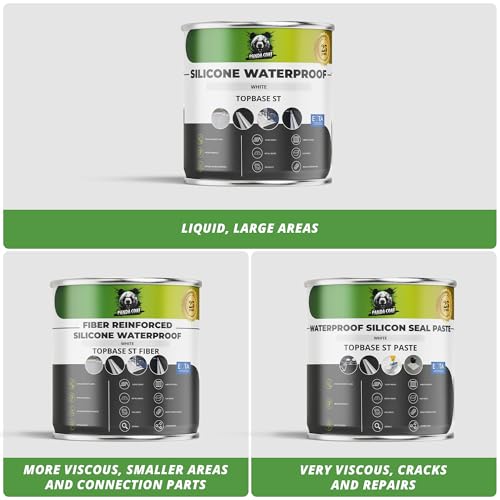
PandaCoat TopBase ST Fiber is the glass-fibre reinforced version of TopBase ST, built for vertical surfaces and detail work: chimneys, gutters, joints, sloped upstands. The glass fibre thickens the silicone into a non-drip paste, so the coating stays put on vertical surfaces instead of sliding down.
TopBase ST Fiber benefits
🧱 Non-drip consistency for verticals and details
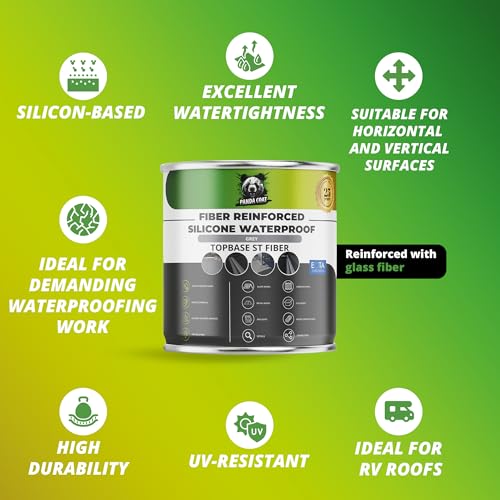
Glass fibre thickens the silicone – it clings to chimneys, upstands and joints without running, even when applied vertically.
🔧 Better crack bridging
The thicker consistency reliably seals small details and cracks where a thinner coating would be too weak.
🌦️ Weatherproof in any conditions
Once cured, the membrane resists UV rays, rain, snow and temperature swings from -30°C to +80°C.
🖌️ Easy to apply – usually no primer needed
Apply with a brush or roller in 2-3 thin coats. Primer is usually not needed on ceramic or metal; for concrete use Primer VL, for bitumen Primer VL 2K.
What it is
A single-component, glass-fibre reinforced silicone coating – the same TopBase ST chemistry, just thicker and non-drip. Cures with atmospheric humidity into a strong, elastic, waterproof membrane. Used as a TopBase ST complement for detail elements, or standalone on smaller/vertical areas. Available in grey or white.
Where to use
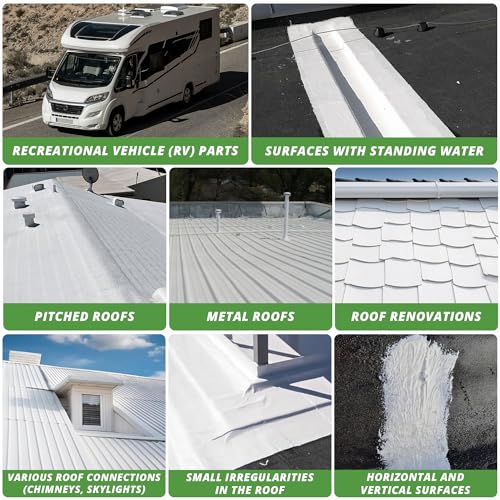
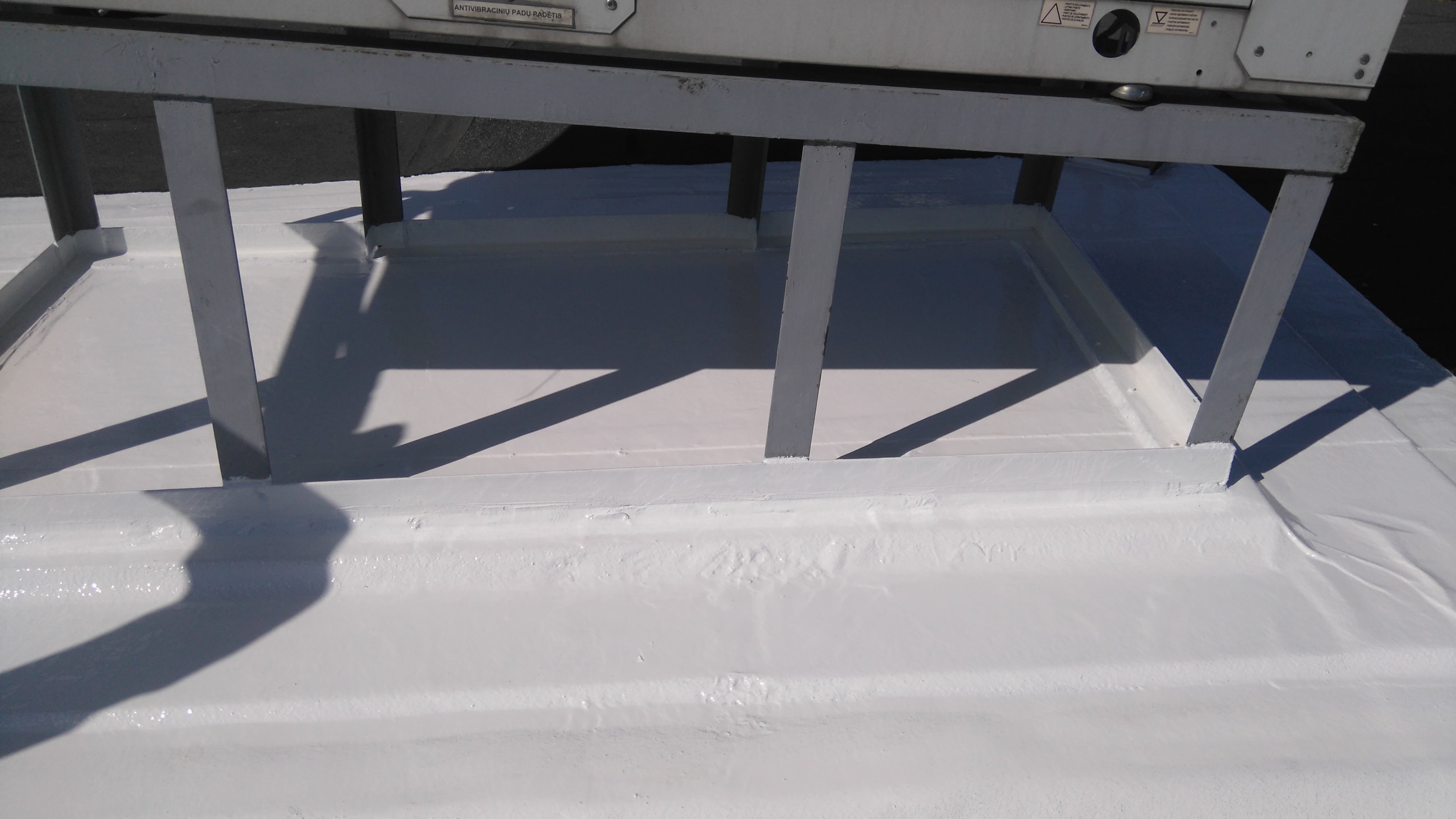
- Chimneys, gutters, roof joints and upstands
- Sloped and vertical surfaces where a thinner coating would run off
- Small cracks and damaged spots
- Caravan and motorhome roofs, outbuildings, terraces
- Concrete, metal, ceramic, wood and glass surfaces
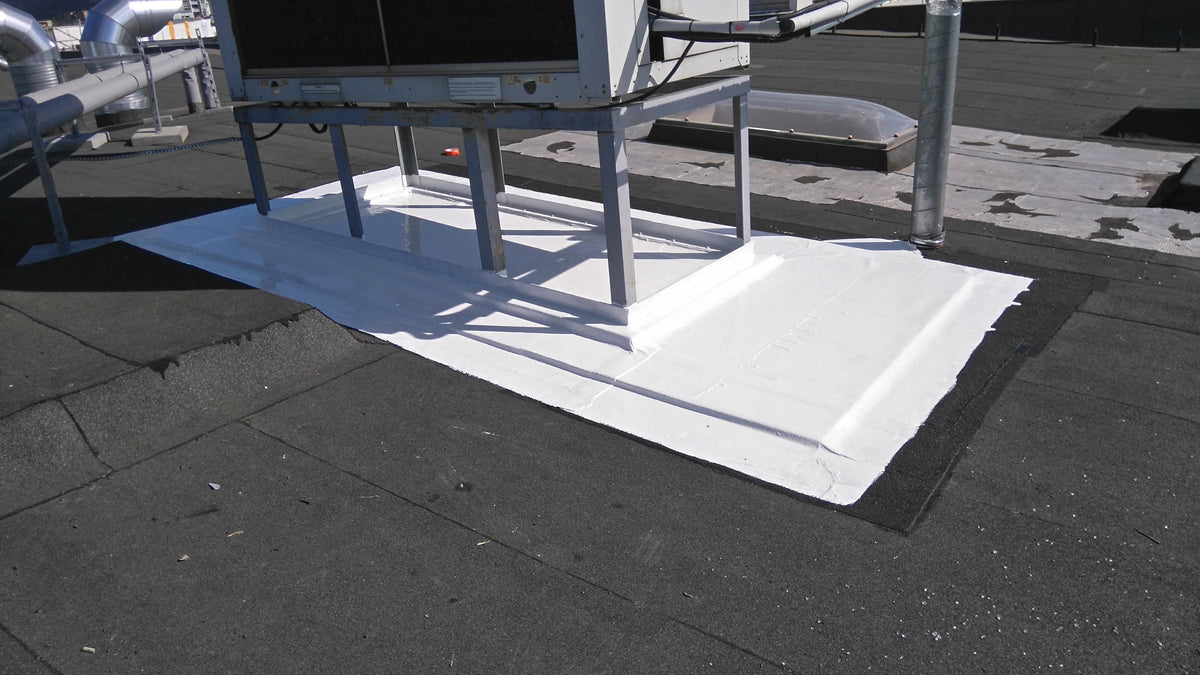
- Extra reinforcement alongside TopBase ST on flat-roof details
Technical properties
- Relative density: 1.265 g/cm³ (SDS)
- Dynamic viscosity: 1800-2200 cP
- Flash point: 67°C
- Working temperature: -30°C to +80°C (same TopBase ST chemistry)
- VOC (Supply): 21.93% by mass (0.28 g/L, 20°C)
- Classification per CLP 1272/2008: not hazardous (EUH066, EUH208 supplementary statements)
Source: PandaCoat TOPBASE ST FIBER Safety Data Sheet (SDS, v.30). This version has no separate technical data sheet (TDS) or Declaration of Performance (DoP/ESD) – only the base TopBase ST line has those.
Application
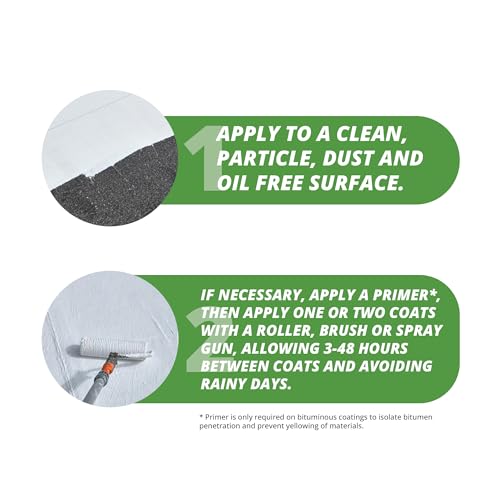
The substrate must be clean, dry, free of dust and grease (concrete moisture <5%). Primer is usually not needed on ceramic or metal; for concrete use Primer VL, for bitumen Primer VL 2K. Pre-seal joints and seams with TopBase ST Paste sealant.
Apply TopBase ST Fiber with a brush or roller in 2-3 thin coats (unlike base TopBase ST, which only needs one thick coat) – the thicker consistency simply doesn't allow a single thick coat to be applied on vertical surfaces. Allow 3-48 hours between coats, depending on ambient conditions. A surface skin forms after ~2 hours.
Note: this is a complementary TopBase ST version for details/verticals – use it standalone on small areas, or together with base TopBase ST on flat-roof details, not as a replacement for a full roof.
You May Also Like:


